Work / Case Study
Weston Theatres
Independent theatres were losing ground to the chains on technology. I built the brand and platform strategy that lets them compete without giving up what makes them local.
Overview
Independent together.
The challenge
Independent theatres have what the chains can’t copy: local character, familiar faces, a sense of place. What they don’t have is the technology.
Moviegoers expect to find a film, buy a ticket, order food, and earn rewards from their phone. Most independents were running on outdated, disconnected tools: a website from one vendor, ticketing from another, concessions on a third, and no real rewards program. A great theatre was getting lost behind a bad digital experience.
The approach
The easy answer was to make them look like a chain. I didn’t want that. These theatres win because they’re local.
So the strategy was scale without the stencil. Give independents the shared infrastructure a chain has, and let every theatre keep its own name, its own building, and its own personality.
The solution
Weston is one connected brand and customer ecosystem that independent theatres join. Shared ticketing, concessions, rewards, and an app. Each theatre stays itself, with Weston standing behind it.
The mission line sums it up: We build the tools that keep Main Street lit.
01 — Strategy
Built to be joined, not imposed.
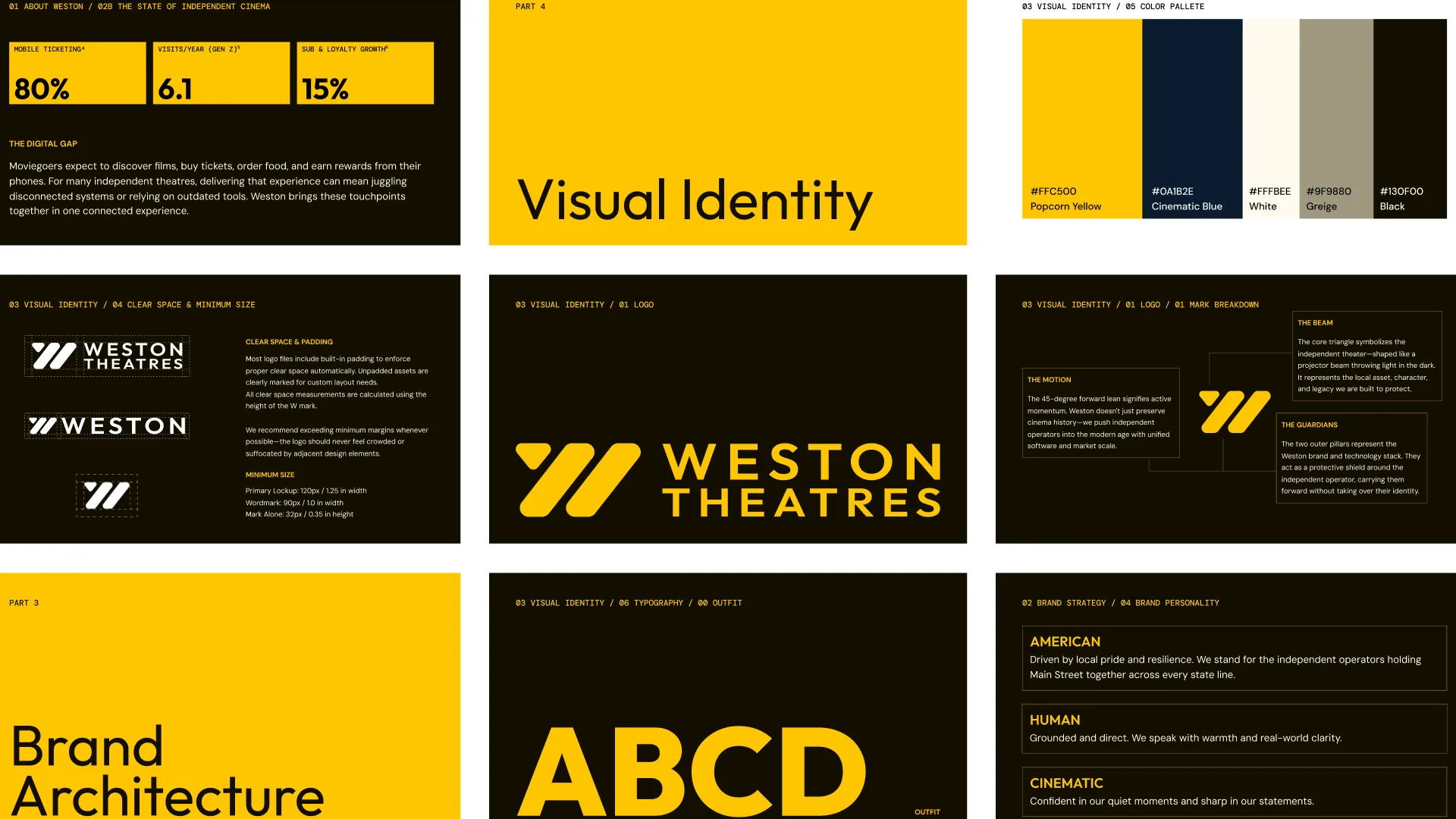
Positioning came first. Weston isn’t a chain and it isn’t just software. It’s a network: one brand, shared tools, local theatres. That became the line everything ladders up to: Independent together.
Architecture: an endorsed model. The theatre’s name stays on the marquee and Weston is the endorser. Three tiers let each theatre pick how far in to go: Powered by Weston, Weston Cinema, and Weston Premier. Adoption is structured and physical changes stay practical, so nobody has to start from scratch.
Values
- 01
Fiercely Local
Every decision protects the theatre’s place in its town.
- 02
Open Architecture
One shared system that fits the buildings, people, and setups theatres already have.
- 03
Cinematic Character
It should feel like going to the movies, not like using a utility.
Personality
American. Human. Cinematic. Plainspoken and warm, never corporate. That voice runs through the copy, the app, and the signage.
02 — The Mark
A sign over the door.
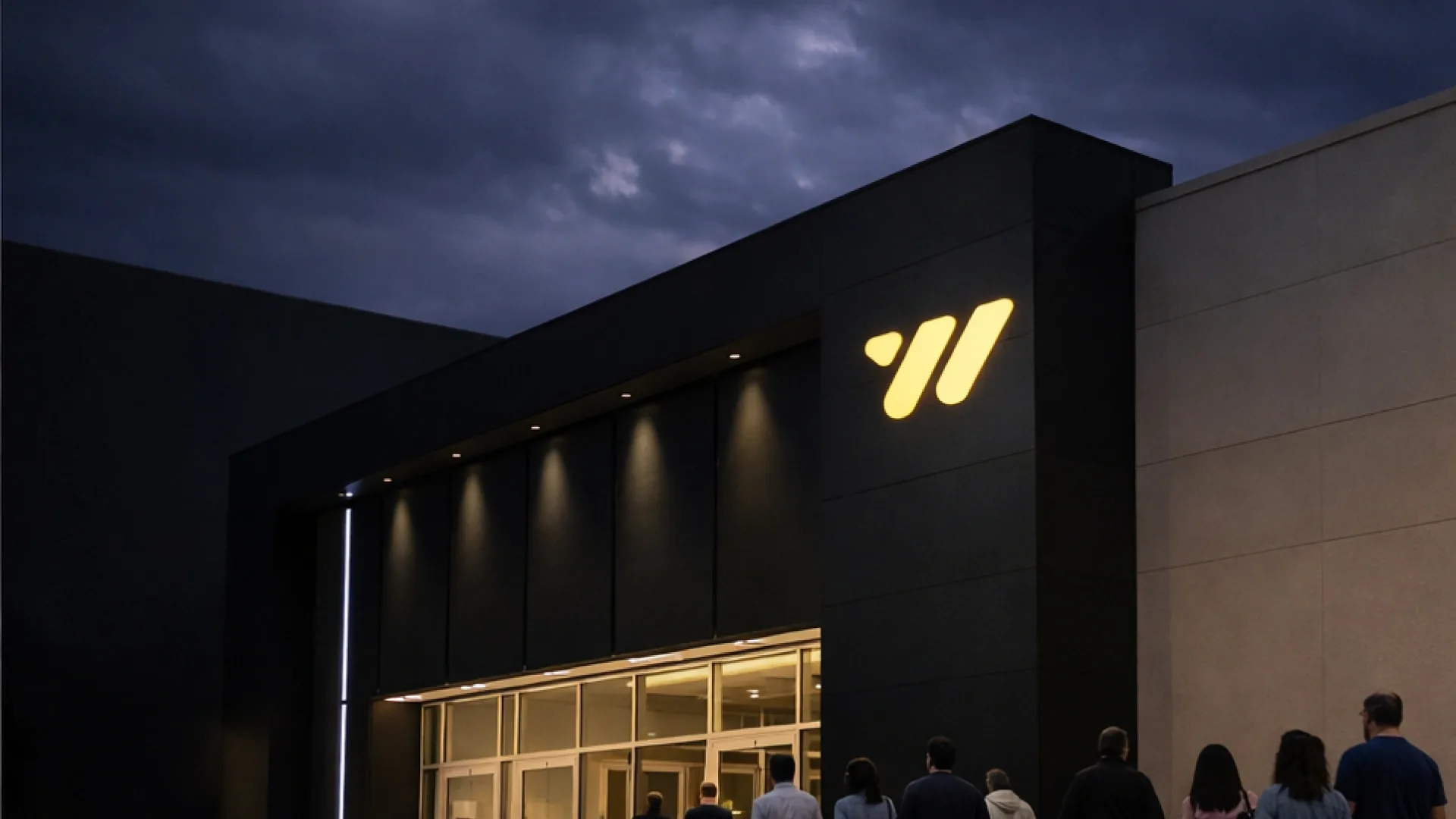
The W does three jobs. Its strokes read as a projector beam, as guardians standing shoulder to shoulder, and as forward motion. It’s the network in one shape: theatres protected together and moving ahead.
It had to work as an endorsement too: small next to a theatre’s own name, and big and lit on a building.
03 — Color
Popcorn Yellow leads.
Yellow is marquee light: warm, visible from the street, and impossible to mistake for a chain’s red or blue. Deep cinematic blue and near-black ground it. White and greige keep it calm.
- Popcorn Yellow#FFC500
- Cinematic Blue#0A1B2E
- White#FFFBEE
- Greige#9F9880
- Black#130F00
04 — In the world
On Main Street.
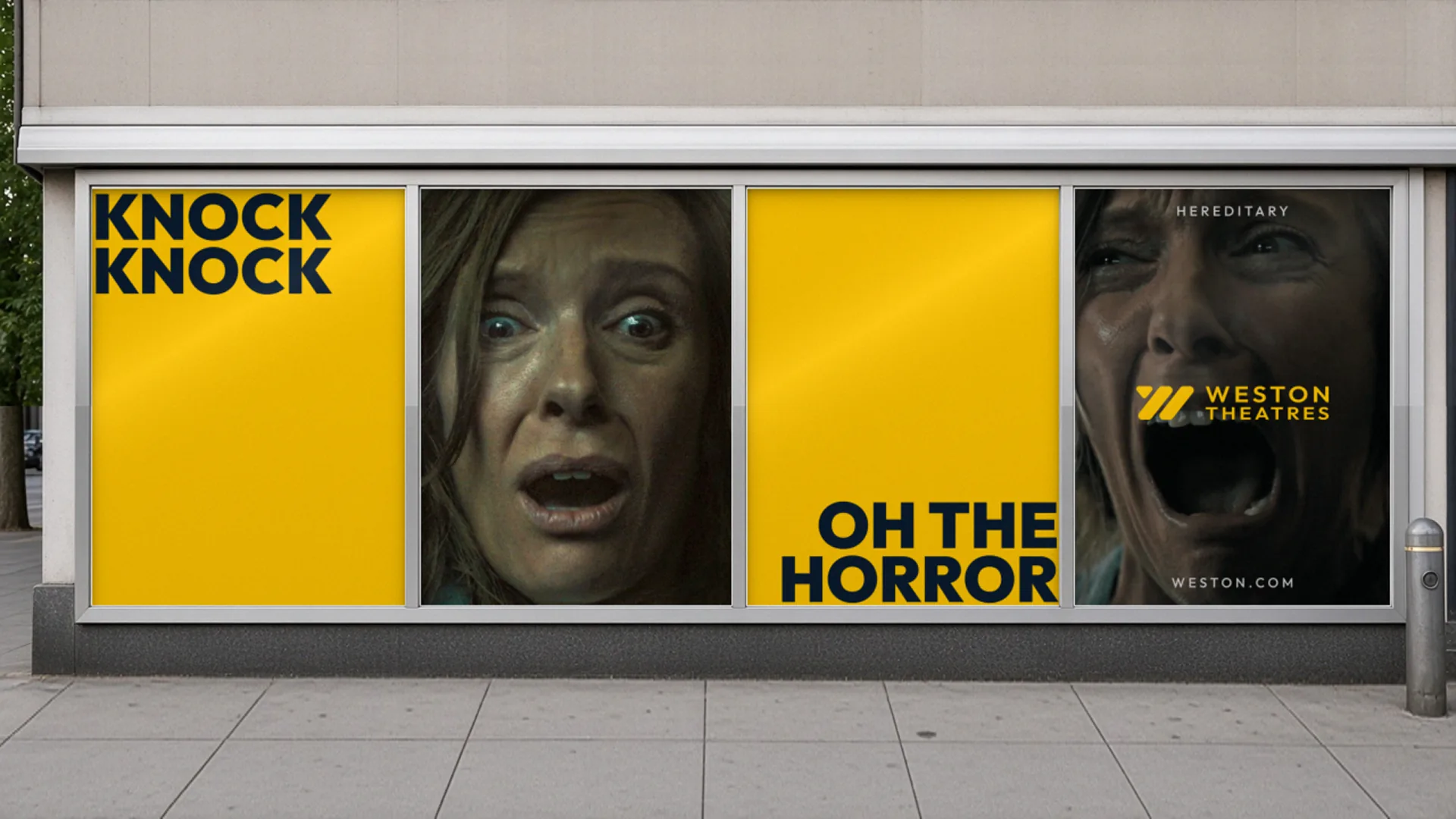
The system had to live on real buildings and in real windows. The mark scales from a lit sign over the door to a poster in the glass, and the theatre still reads as local. Moviegoers learn to see the W as a promise of a modern night out.
05 — The app
One app, every independent screen.
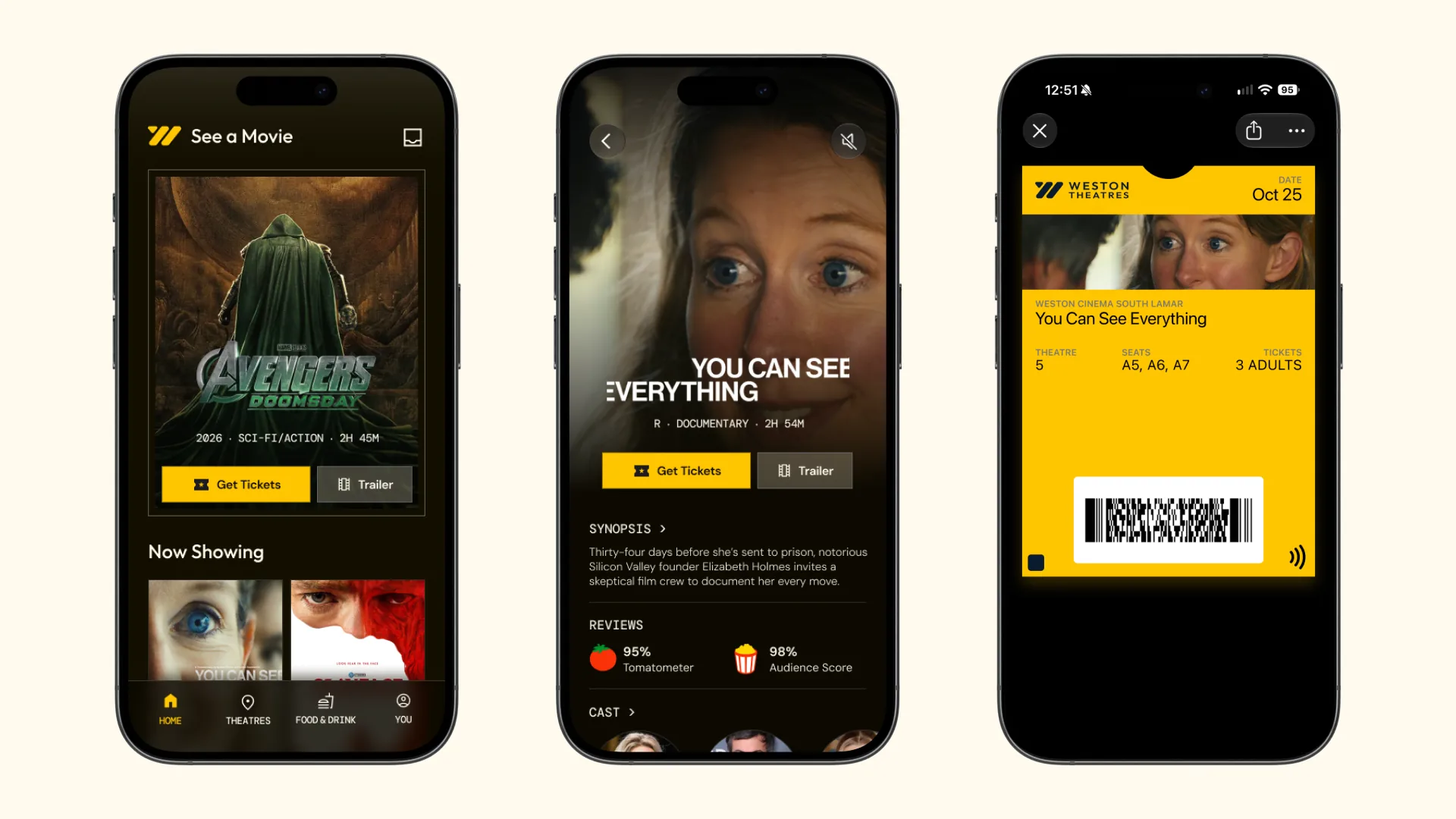
The app is where the strategy pays off for moviegoers. Find a film, see showtimes, buy a ticket, and carry it in your wallet. It’s the same smooth flow at every member theatre, and each theatre’s identity stays front and center.
06 — Brand guidelines
A system others can run.
A network only works if every member gets it right without me in the room. The brand book covers strategy, personality, logo use, clear space and minimum sizes, color, type, and the endorsed architecture, so each theatre can roll it out on its own.